

What Is Creatine and Why Should Women Use It?

What Is Creatine?
Creatine is a naturally occurring compound that plays an important role in cellular energy production. It’s found in muscle and brain tissue and is made from three amino acids: arginine, glycine, and methionine.
Creatine helps support the body’s natural ATP regeneration process, which becomes especially relevant during high-intensity or demanding activity.* From strength training and tennis to Pilates, running, and everyday movement, creatine has become one of the most extensively studied supplements in exercise and performance research.*
Benefits of Creatine for Women
Strength & Exercise Performance*
Research on creatine has long focused on strength and exercise performance. Emerging research suggests women may have different creatine needs across life stages, influenced in part by muscle mass, dietary intake, and hormonal shifts.*
Whether your workouts look like Pilates, tennis, HIIT, strength training, or long walks, creatine supports the energy systems muscles rely on during movement and exercise.*
Recovery & Consistency*
Creatine has also been studied for its role in exercise recovery and muscle function.* For many people, the benefit is less about intensity and more about consistency — feeling supported enough to keep showing up over time.
Cognitive Function & Mental Energy*
Beyond exercise, research around creatine has expanded into cognitive function and cellular energy.* Because the brain is highly energy-demanding, researchers continue exploring creatine’s role during mentally demanding conditions such as stress, fatigue, and sleep deprivation.*
Healthy Aging*
Research on creatine has also expanded into healthy aging, particularly alongside resistance training and long-term muscle function.* As women age, maintaining strength, balance, and mobility becomes increasingly important for overall wellness and quality of life.
What Form of Creatine Is Best?
Creatine monohydrate is the form used in the vast majority of creatine research. It remains the most established and extensively studied form available, with decades of research supporting its role in strength and exercise performance.*
We chose the form the research continues to return to.
How Much Creatine Should I Take?
For most people, 3–5 grams of creatine monohydrate per day is the amount most commonly used in research.* Consistency matters more than timing, which is why many people simply build it into their daily routine.
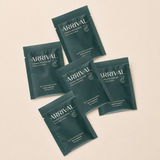
One scoop a day is enough. Mix it into water, smoothies, yogurt, oatmeal — whatever fits naturally into your life.
Why Arrival
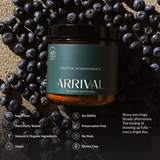
Arrival Creatine was designed to feel simpler, cleaner, and more thoughtful.
Just two ingredients:
5g of creatine monohydrate and organic blueberry powder for a subtle, natural taste.
No fillers. No artificial flavors. Nothing unnecessary.
The goal was never to create another supplement that feels complicated or performative — just one that earns a place in your everyday routine.
A More Thoughtful Approach
For years, much of the conversation around creatine stayed narrowly focused on performance alone, even as research continued expanding into broader areas of wellness and healthy aging.*
Arrival was built for women who care about feeling strong, energized, and supported for the long game.
*These statements have not been evaluated by the Food and Drug Administration. This product is not intended to diagnose, treat, cure, or prevent any disease.